6. The Masculinity Red Herring
Are We Looking at the Wrong Level in Primary Prevention?
In crime fiction, a red herring is a clue that appears central to the mystery, but ultimately distracts attention from the deeper mechanism driving events.
It keeps investigators occupied. It generates analysis. It feels significant. But it leads away from the underlying cause.
Increasingly, masculinity feels like it may be playing a similar role in primary prevention work.
For decades, the prevention of men’s violence against women has focused heavily on masculinity:
traditional masculinity,
toxic masculinity,
hegemonic masculinity,
healthy masculinity,
positive masculinity,
emotionally intelligent masculinity.
We critique masculinity. Reconstruct masculinity. Debate masculinity. Attempt to soften masculinity. Attempt to redefine masculinity. And yet the same underlying patterns continue to reappear:
dominance,
entitlement,
coercion,
emotional disconnection,
defensiveness,
reduced awareness of impact,
loneliness,
relational instability.
Even the newer versions of masculinity often seem to reproduce the same tensions in different forms.
Which raises an uncomfortable question: What if masculinity is not the deepest level of the problem?
What if masculinity has become the thing we keep analysing while the underlying developmental structure producing these patterns remains comparatively untouched?
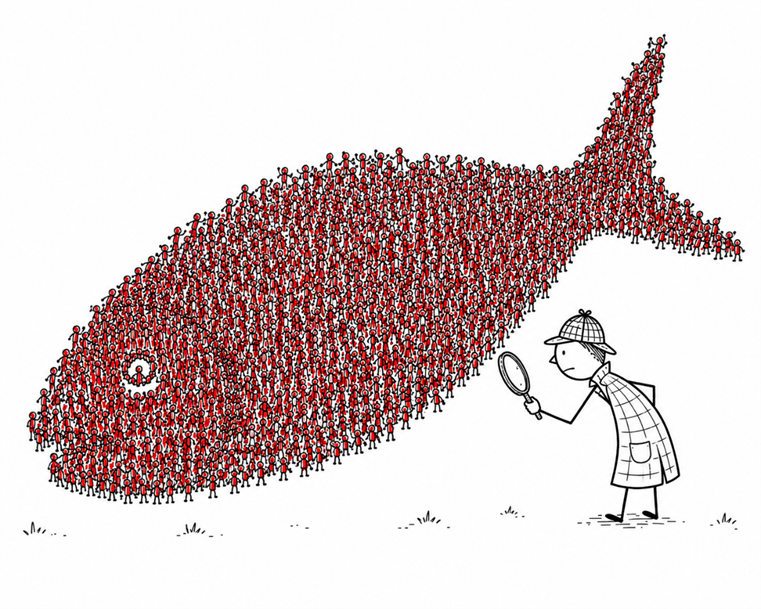
This is not an argument that masculinity is irrelevant. Masculinity clearly matters. Masculine norms shape behaviour. Gendered socialisation matters. Patriarchal systems matter. The field of primary prevention has been essential in making these dynamics visible.
But visibility is not the same thing as explanation. And increasingly, masculinity frameworks seem better at describing patterns than explaining why those patterns emerge so consistently – or why they remain so resistant to change.
Because once we move beneath the level of norms, attitudes, and identity, another possibility begins to emerge. Perhaps any of the traits we associate with harmful masculinity are not fundamentally “masculine” at all. Perhaps they are the predictable expression of a more basic developmental imbalance: the overdevelopment of the individual perspective without a sufficiently developed relational one.
From this perspective, many traits associated with harmful masculinity begin to look different.
· Dominance reflects an over-prioritisation of the self in relation to others.
· Entitlement reflects the assumption that one’s own needs and perspective are primary.
· Emotional restriction often emerges from the need to maintain an image of oneself as strong, independent, self-contained, and invulnerable.
· Control emerges from the need to maintain strength, certainty, and superiority within a competitive individual framework.
· Reduced awareness of impact reflects the tendency to experience one’s own intentions as more visible and significant than the lived experience of others.
None of these patterns require masculinity to exist conceptually in order to emerge. They arise naturally from a way of perceiving the world that is heavily organised around separateness, autonomy, self-interest, and individuality without a corresponding awareness of interdependence and mutual impact.
In this sense, masculinity is not be the underlying mechanism. It is simply the cultural expression of something deeper.
This matters because the level at which we define the problem shapes the level at which we attempt to intervene. If masculinity is understood as the core problem, then prevention work naturally focuses on:
reshaping masculine norms,
redefining male identity,
promoting healthier masculinities,
and encouraging alternative forms of masculine expression.
But if the deeper issue is developmental imbalance, then these approaches remain structurally limited. Because a person can adopt:
progressive gender beliefs,
emotionally expressive language,
anti-violence values,
and “healthy masculinity”
while still operating from a predominantly individual frame of perception.
They eill still experience:
their own intentions as central,
their own emotional position as primary,
and other people’s experience as secondary or difficult to fully perceive.
This helps explain why some forms of prevention work can feel fragile or performative. Men can learn the language of relationality before relational reality itself becomes fully visible.
They can learn:
accountability scripts,
vulnerability language,
emotional communication techniques,
and anti-sexist frameworks,
while the deeper perceptual orientation underneath remains largely unchanged.
And when pressure rises:
shame,
conflict,
rejection,
emotional threat,
the same underlying patterns often re-emerge.
Because beneath the surface, the same structure is still operating. This is where masculinity may increasingly function as a red herring. Not because it is false. But because it keeps attention fixed at the level of identity and expression while the deeper developmental mechanism remains less examined.
And this is why the field often feels caught in an endless cycle of reconstructing masculinity.
Traditional masculinity fails. So we attempt healthier masculinity. Then emotionally open masculinity. Then vulnerable masculinity. Then caring masculinity. Then anti-patriarchal masculinity. But the structure itself remains intact: the continued organisation of male identity around masculinity as the central frame.
Meanwhile, the deeper developmental imbalance underneath continues largely unchanged.
And this is where the focus of prevention may need to shift. Not away from gender. Not away from masculinity entirely. But beneath it. Toward the more fundamental question of how human beings learn to perceive themselves in relation to others.
Because human beings exist simultaneously in two realities:
as distinct individuals,
and as members of an interconnected human whole.
Both realities are real. Both are fundamental aspects of human existence.
In contrast, masculinity and femininity are socially constructed ways of organising identity around these realities. But individuality and relationality themselves are not social constructs. They are axiomatic conditions of being human.
The problem emerges when one side of human reality becomes heavily dominant while the other increasingly falls out of view.
From this perspective, the challenge facing primary prevention may not simply be: “How do we create healthier masculinities?”
But something deeper: “How do we support the development of a more complete way of perceiving human reality itself?”
Because if the underlying issue is developmental imbalance rather than masculinity alone, then endlessly reconstructing masculinity may never fully resolve the problem.
It may simply keep us circling around it.